
Guest Post by Nancy Viau
bog - verb. To get stuck while doing something; to be hindered in movement; to be prevented from making progress
Writers get bogged down. It’s hard to be creative and productive all of the time. There are days when our thoughts wander and other things seem more important or interesting. We tell ourselves we’ll feel more like writing tomorrow. A little procrastination never hurt anybody, right? But what if our passion for writing dwindles because we’re not practicing our craft? What if writing becomes so hard that we start to dislike it, or even worse, we stop altogether?
Kids have a knack for getting bogged down, especially when asked to complete a structured writing assignment. They often lose their patience and focus, and become agitated and overwhelmed. Many feel the pressure for perfection. After all, there are so many rules to consider—rules about spelling, sentence and paragraph formation, grammar, setting, plot, character, theme, point of view, rhyme, and a hundred more. Whew!
No matter what the issue, the bottom line is that when writers get bogged down, the flow of words from brain to paper stops.
And that’s okay. Really. Whether you are the writer or you are teaching writing, learn to embrace the fact that writing is more than the creation of outstanding prose or beautiful poetry. It’s a creative process, one that needs a bit of nurturing now and then. The steps below can be used to help writers of all ages with that process. Soon, process will be replaced with progress.
1. Cut pictures out of magazines. Is there a picture of your main character? Is there a setting you like? Does a facial expression give you an idea about plot?
2. Draw a tree. On the trunk, put the title of your story. On the branches, list all the possible things that may happen in that story.
3. Talk about your story to a friend. If stuck, let your friend pick up where you left off. If a whole story is too overwhelming, talk about titles only.
4. Brainstorm. Even if an idea sounds ridiculous or you haven’t formed it into complete sentences, put it down on paper. Put that paper away in a SEEDS file. When you look at it later, you may find the seed of a brilliant idea.
5. On the computer or on your phone, say your thoughts out loud and record them, even if those thoughts are random and don't connect to each other.
6. Draw the first picture that comes to your mind. Is there a story in there?
7. Watch TV. (I did NOT say that, did I?) Well, guess what? There are wonderful story ideas (not to mention interesting bits of dialogue) stuck inside TV dramas, comedies, movies, cartoons, and yes, even reality, game, and cooking shows. Borrow some of these ideas and tweak them, making them your own.
8. Sing, play an instrument, or listen to music. Music enhances mood. Good moods lead to productivity.
9. Travel or try a new experience. Ever been camping in your living room? Ever sleep with your head at the bottom of your bed instead of the top? Ever eaten breakfast for dinner or dinner for breakfast? You'd be surprised at how your brain wakes up when you mix things up.
10. Get a good night's sleep, but keep a notebook by your bed. If a great idea wakes you at four in the morning, jot it down immediately, before your conscious mind edits it.
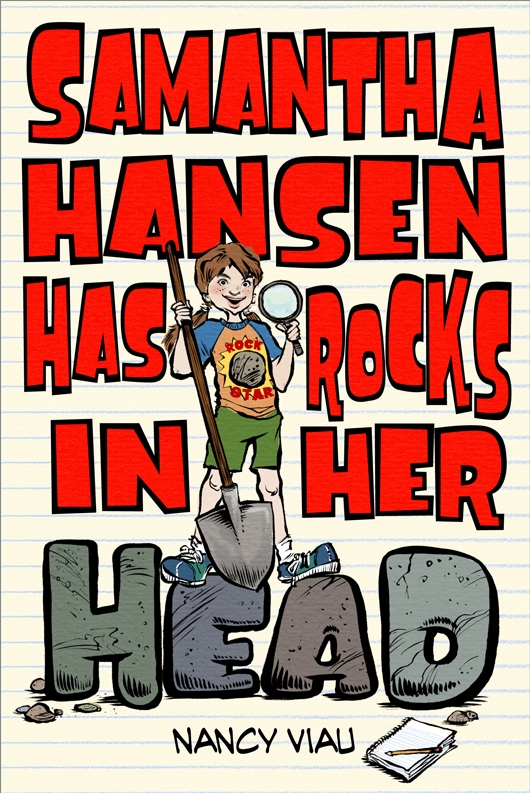
Guest Bio: Nancy Viau has worked as an elementary school teacher, a counselor in an after-school program, an instructor for reluctant readers, and a freelance writer. She now specializes in writing for children, and along with her novel for kids 8-12, Samantha Hansen Has Rocks in Her Head, and two forthcoming picture books, I Can Do It! and Storm Song), her stories, poems, and activities appear in Highlights, Highlights High Five, Babybug, Ladybug, and many other magazines. Please visit her website at http://www.nancyviau.com/.

