Showing posts with label Nancy Viau. Show all posts

Monday, February 6, 2017

Story Scenes: Just One Thing


Anthony Pantaloni needs Just One Thing!—one thing he does well, one thing that will replace the Antsy Pants nickname he got tagged with the first day of fifth grade, one GOOD thing he can “own” before moving up to middle school next year. Every kid in Carpenter Elementary has something: Marcus is Mr. Athletic, Alexis is Smart Aleck, Bethany has her horse obsession, and even Cory can stake a claim as being the toughest kid in the whole school. Ant tries lots of things but – KA-BOOM! – nothing sticks! It doesn’t help that there are obstacles along the way—a baton-twirling teacher, an annoying cousin, and Dad’s new girlfriend to name a few.


“With tons of humor and lots of heart, this story jabs into the core of middle grade insanity and the question of whether or not a kid can ever make it out with even a little bit of self-esteem intact.” ~ T. Drecker (Bookworm for Kids) Discussion Guide for Teachers:

Follow-up Activity:
Fold an 8 ½ x 11 plain piece paper in half long end to long end.
Fold it again. And once more.
Open sheet to find 8 blocks.
Place paper on desk horizontally so that there are 4 blocks are across the top and 4 at the bottom.
In the corners, number the blocks left to right so that #5 is the first number on the second row.
Write KA-BOOM! somewhere on block #6.
Students get together in pairs, and interview each other using the following questions:

What kinds of activities/sports/hobbies do you do well?

What activities /sports/hobbies do you wish you did well?

In terms of activities/sports/hobbies, what frustrates you?

If you’ve found your One Thing, what is it? Is that working out for you? How?

If you could change your One Thing, what would it be?

Next, using the divided paper, each student creates a visual representation of another student’s journey in finding his/her One Thing. Using the interview answers above as a guide, they write a scene (like a mini-story) in 8 blocks. Each block is illustrated and supported by minimal text. As for the climax, that occurs on block #6 where KA-BOOM! is written. Here, the writer shows the turn of events that leads to a final outcome on block #8. Students can base their story scenes on entirely on the interview and write a factual account, or use the answers for inspiration only and write absolute fiction.

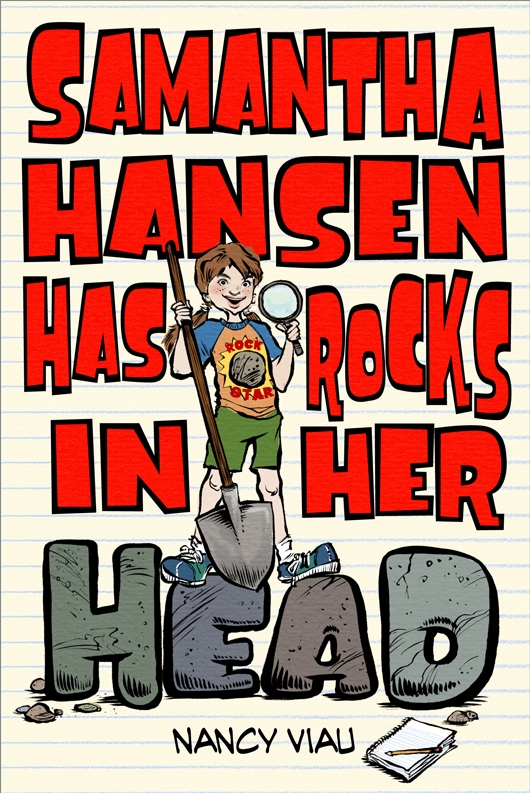
BIO: Nancy Viau no longer worries about finding her One Thing for she has found quite a few things she loves, like being a mom, writing, traveling, and working as a librarian assistant. She is the author of the picture books City Street Beat, Look What I Can Do! and Storm Song, and an additional middle-grade novel, Samantha Hansen Has Rocks in Her Head. Nancy grew up in the suburbs of Philadelphia, PA and now resides in South Jersey. 
Vist Nancy at www.NancyViau.com  
www.KidLitAuthorsClub.com or Twitter: @NancyViau1

Monday, February 15, 2016

COME ON, FEEL THE NOISE!

guest post by Nancy Viau

Kids love sound words, and onomatopoeia is often taught as early as kindergarten. Students know that onomatopoeia makes reading aloud fun, but do they know that they can use onomatopoeia in their writing now and for many years to come? Why not help them create an Onomatopoeia Resource List?

Encourage students to listen for the sounds in and around their classroom—the tick, tock of clock, hands clapping, fingers snapping, water splashing, shoes clacking, birds tweeting, etc. Name the onomatopoeia and begin your list as a class (tick, tock, clap, snap, splash, clack, tweet). Students copy the words in their writing journals, leaving plenty of room for additions.


Introduce Storm Song, one of my titles. Prepare for reading by asking students what sounds they hear during a storm, then read it straight through. Talk about what happens in the story and ask if the story contains any onomatopoeia. Have kids add these words to their lists.

Next, do the same thing with City Street Beat, my latest rhyming picture book. Like Storm Song, it’s filled with onomatopoeia. As you read it aloud, you’ll find that students have acquired quite an ear for sound words.


At this point, Onomatopoeia Resource Lists should contain approximately 100 words! Here’s a cool fact: My personal ORL has 402 words—YAY! 

Extended Activities:
Come On, Write the Noise: Students imagine a noisy setting such as a city, pool, zoo, amusement park, airport, farm, pet store, or home. After brainstorming noises in pairs, they get those pencils TAPPING and use at least 10 sound words in a one-page story.

Come On, Spell the Noise: Add the word “onomatopoeia” to spelling tests. Getting 12 letters in perfect order is something to be proud of. WHOOT!

Come On, Find the Noise: Work with the school librarian and help kids ZIG and ZAG, SHUFFLE and ZOOM through the library to find titles that contain onomatopoeia. 

Here are some helpful lists:

https://www.librarything.com/tag/onomatopoeia

BOOM! Your students understand the importance of onomatopoeia and now have a resource list to use, and add to, for the next decade.

Nancy Viau is the author of three picture books: City Street Beat, Look What I Can Do! and Storm Song, and two middle-grade novels: Samantha Hansen Has Rocks in Her Head and Just One Thing! (Fall 2016). In her interactive, energetic story hours, assembly programs, and writing workshops, Viau gets young readers rhyming and writing on the spot. She’s a Jersey girl with ties to both the country and the seashore, and finds inspiration in nature, travel, and her job as a librarian assistant. www.NancyViau.com


Monday, May 12, 2014

HOW TO GROW A NATURALIST

by guest blogger Nancy Viau

A naturalist is someone who loves and appreciates nature and who studies plants and animals as they live in nature. Naturalists often write about their observations in journals, magazines, and non-fiction books. I chose to pen my observations in the form of a picture book, Look What I Can Do!. My goal was to have children see a variety of animals in their natural habitat, accomplishing tasks and overcoming challenges that are part of growing up. Illustrator Anna Vojtech has done a wonderful job bringing my words to life and creating lush spreads filled with color and depth.

What follows is a very basic science activity with writing tie-ins (for grades K-2). Its purpose is to increase awareness and respect for the animals in our immediate surroundings.  

Introduction
Train your young students in the art of observation by practicing with common objects. For this activity, they should use only two senses: seeing and hearing. Allowing children to use only sight and sound as reference points helps them to stay on task. Plus, later on, when observing animals, students may be too far to smell them, and of course, they shouldn’t be encouraged to touch them!

Put a pencil on every desk.
Using the questions below, have students create a list (oral or written) based on what they see and hear.
           What color is the object?
What shape is it?
            How big is the object?
(Big as a______; Long as a _______; Fat as a _______, etc.)
                          What is the object’s placement in the environment?
                          Does the object make a sound of its own?                           
Repeat with three other objects: a watch, a cup of water, a crumpled paper.

Research
Students research three animals that may be found in the immediate area of the school. They note color, size, what they eat, their homes, families, and habits.

Activity
The easy part:
Students choose two to three favorite animals.
Each student receives a notebook (Naturalist’s Journal) and pencil. A towel or rug square to sit on comes in handy, too.
Time to head outside! Students find a place where they are likely to spot one or more of the animals they have picked.
The hard part:
Students sit and wait, very quietly. Students should not coax any animal out with snacks or noises.
The writing:
When an animal is spotted, students observe and make notes based on sight and sound only.  
They are not to make up stories (yet).
A sketch is also appropriate.

Back in the Classroom
Share and compare findings.
Make a classroom collage using sketches or cut-out pictures of animals observed.
Create a map of the observation area. Students add in their animals.
Discuss non-fiction and fiction, and how facts and research are used in both.
Children use their detailed observations of animals to write each type of story. Encourage use of descriptive language with sight and sound elements.

Corresponding Lessons
             Five Senses
             Habitats
Onomatopoeia
Communities/Neighborhoods
Introduction to Scientific Method 
              

Nancy Viau is the author of three nature-inspired books: Look What I Can Do! (Nominated for the Keystone to Reading Book Award), Storm Song, and Samantha Hansen Has Rocks in Her Head. Her Fall 2014 title, City Street Beat, invites readers on a toe-tappin’ musical journey from the country to the city. When not writing, Nancy can be found hiking, biking, or visiting schools across the country and around the world (via Skype). Visit her at www.NancyViau.com


Monday, April 30, 2012

ARE YOU BOGGED DOWN? Ten Helpful Tips to Get You Writing Again

Guest Post by Nancy Viau

bog - verb. To get stuck while doing something; to be hindered in movement; to be prevented from making progress

Writers get bogged down. It’s hard to be creative and productive all of the time. There are days when our thoughts wander and other things seem more important or interesting. We tell ourselves we’ll feel more like writing tomorrow. A little procrastination never hurt anybody, right? But what if our passion for writing dwindles because we’re not practicing our craft? What if writing becomes so hard that we start to dislike it, or even worse, we stop altogether?

Kids have a knack for getting bogged down, especially when asked to complete a structured writing assignment. They often lose their patience and focus, and become agitated and overwhelmed. Many feel the pressure for perfection. After all, there are so many rules to consider—rules about spelling, sentence and paragraph formation, grammar, setting, plot, character, theme, point of view, rhyme, and a hundred more. Whew!

No matter what the issue, the bottom line is that when writers get bogged down, the flow of words from brain to paper stops.

And that’s okay. Really. Whether you are the writer or you are teaching writing, learn to embrace the fact that writing is more than the creation of outstanding prose or beautiful poetry. It’s a creative process, one that needs a bit of nurturing now and then. The steps below can be used to help writers of all ages with that process. Soon, process will be replaced with progress.

1. Cut pictures out of magazines. Is there a picture of your main character? Is there a setting you like? Does a facial expression give you an idea about plot?
2. Draw a tree. On the trunk, put the title of your story. On the branches, list all the possible things that may happen in that story.
3. Talk about your story to a friend. If stuck, let your friend pick up where you left off. If a whole story is too overwhelming, talk about titles only.
4. Brainstorm. Even if an idea sounds ridiculous or you haven’t formed it into complete sentences, put it down on paper. Put that paper away in a SEEDS file. When you look at it later, you may find the seed of a brilliant idea.
5. On the computer or on your phone, say your thoughts out loud and record them, even if those thoughts are random and don't connect to each other.
6. Draw the first picture that comes to your mind. Is there a story in there?
7. Watch TV. (I did NOT say that, did I?) Well, guess what? There are wonderful story ideas (not to mention interesting bits of dialogue) stuck inside TV dramas, comedies, movies, cartoons, and yes, even reality, game, and cooking shows. Borrow some of these ideas and tweak them, making them your own.
8. Sing, play an instrument, or listen to music. Music enhances mood. Good moods lead to productivity.
9. Travel or try a new experience. Ever been camping in your living room? Ever sleep with your head at the bottom of your bed instead of the top? Ever eaten breakfast for dinner or dinner for breakfast? You'd be surprised at how your brain wakes up when you mix things up.
10. Get a good night's sleep, but keep a notebook by your bed. If a great idea wakes you at four in the morning, jot it down immediately, before your conscious mind edits it.

Guest Bio: Nancy Viau has worked as an elementary school teacher, a counselor in an after-school program, an instructor for reluctant readers, and a freelance writer. She now specializes in writing for children, and along with her novel for kids 8-12, Samantha Hansen Has Rocks in Her Head, and two forthcoming picture books, I Can Do It! and Storm Song), her stories, poems, and activities appear in Highlights, Highlights High Five, Babybug, Ladybug, and many other magazines.  Please visit her website at http://www.nancyviau.com/.