Showing posts with label Madelyn Rosenberg. Show all posts

Sunday, April 22, 2018

Taking Care of the Earth


guest post by Madelyn Rosenberg

Both Earth Day and National Poetry Month fall during April, so it’s a good time to introduce you to Take Care, a rhyming book about taking care of the earth and each other.


I wrote Take Care after watching a series of gut-wrenching events unfold in the news. This particular series of events culminated in the nightclub shooting in Orlando. How can we keep doing this to each other? I thought – and have thought, again, many times since. I have similar thoughts when I see people abusing the planet – when someone throws a cigarette butt out a car window or when they find a whale on a beach in Spain with his stomachfull of plastic.

I react with rage. And sadness. And I try to reassure myself that we can learn to take care of each other and the planet and make things better. Poetry, whether we’re writing it or reading it, can be burn or balm. My book is meant to be a balm, though it’s fueled by burn. It begins:

Take care of the world, of the mountains and trees
Tend to the world, all the bumbles and bees
Color the world, with greens and with blues
Heal up the world with the words that you choose


Following are a few related prompts:

Emotion poems
What makes you angry? What makes you sad? What makes you happy and what makes you heal? All poems convey emotion, and for this writing prompt, we’re going to come at it full throttle. The lesson I try to always teach my kids when it comes to writing is that specifics are important. So urge your class, when they’re writing about a particular emotion, to think really hard about the things that make them feel the way they do. Does their emotion have a color? A temperature? A season? Is it tied to a specific event, like a fight with a friend or the loss of a stuffed animal? (Was anyone else riveted by the search for the rabbit lost on the London Underground?) There are no real rules for this one, but for students who thrive with rules, you can tell them the poem has to be the same number of lines as letters in the type of emotion they’re feeling – or a multiple of that if it’s a short one. Challenge: Can you convey the emotion without mentioning it by name?

A letter to the world
Have the class write a letter to the planet. Maybe it’s an apology note. Maybe it’s a thank you note for a dandelion or a dimpled strawberry or the color green. Again, it’s always great when you can get kids to focus on something specific. Want to get them in the right mood? ? Consider a nature walk around the school for inspiration. Prose or poetry for this one, your pick.

A take-care tree
Ingredients:
A tree branch (a fallen one, please =)
A hole punch
String or yarn
“Leaves” cut from recycled paper. It’s fine if there is printing on one side, as long as the other side is blank. Multiple colors help.
A flower pot
Rocks or newspapers

Place the branch in the flowerpot and use rocks or wadded up newspapers to hold it in place. Have students write their ideas for taking care of the world on the paper leaves. Punch a hole in each leaf and attach it to your branch with the string. Use as a reminder and a classroom decoration for Earth Day, Arbor Day, Tu B’shevat or spring. 

ADAPT IT: If your students do the letters-to-the-world prompt, excerpts on tree leaves also make a nice classroom display.  

BIO: As a journalist, Madelyn Rosenberg spent many years writing about colorful, real-life characters. Now she makes up characters of her own. The author of award-winning books for young people, she lives with her family in Arlington, Va. For more information, visit her web site at madelynrosenberg.com or follow her on twitter at @madrosenberg. And if you try this exercise in your classroom, she’d love to see the results!

Monday, September 25, 2017

This is Just a Test -- Collaborative Writing

Guest Post by Madelyn Rosenberg and Wendy Wan-Long Shang

When we worked on our new middle-grade novel, This Is Just A Test, the two of us (Wendy Wan-Long Shang and Madelyn Rosenberg) collaborated, sending our manuscript back and forth, back and forth, until it was complete. In school, kids collaborate all of the time, on science labs, social studies projects, sports teams, and of course, on writing assignments. Most of the teachers we’ve talked to say that the main way their students collaborate on writing is through peer editing. We thought we’d offer a few ways to have them collaborate on the writing itself.


Character
Our character, David Da-Wei Horowitz, is Jewish (like Madelyn) and Chinese-American (like Wendy). Little pieces of our own experiences and culture went into forming that character, along with plenty of things that are just David’s alone.

Have your students work in pairs to build a character. Think of it like the Build-a-Bear workshop: You’ll be discussing what the character looks like on the outside, but to create a true character, you can’t forget the stuffing – the things that go inside.

Have your students go back and forth, adding one trait at a time until they decide the character is complete.
What does the character like?
What is the character afraid of?
What does she want?
What does he like to eat?
How does she get along with her mother?

This Is Just A Test is set in the 1980s so it counts (much as we hate to admit it) as historical fiction. This assignment can work well as an introduction to historical fiction. Are your students studying World War II or Ancient Civilizations? Have them create a character from the time period they’re studying. How would that character’s fears and foods and fun be different from today?

Setting
Now that your students have a character, have them collaborate on a setting. They can brainstorm and draw. Complete sentences aren’t necessary, just words, phrases and ideas. The focus can be close (the character’s bedroom) or from farther away (the city or woods).

Story
Try brainstorming again, with plot, before having your students sit down to create their story. Make sure they negotiate: Would our character do this? Would our character say this? And make sure they read for voice. Assignments like this help them learn to pay attention to each other’s writing styles so they can make them similar – so that the text and dialogue sound like they’re coming from the same narrator and the same characters.
Is the character serious or sarcastic?
Does she use certain phrases?
If there is interior monologue, how does the character talk to himself?
When our agents said they couldn’t tell which one of us had written what in our book, that was when we knew we had a true collaboration.

Feel free to throw out a few touchstone words to help students find inspiration (yellow, hard drive, cantaloupe) a sentence they have to use (“Oh, it’s on.”) or even a situation (“It was not the sound they expected to come out of a space ship.”) If you’ve chosen to go with historical fiction, provide some old newspapers and photos.

Another type of collaborative story is where authors take on different characters with different perspectives instead of joining forces for one. Given our current political climate, the idea of exploring situations from different perspectives is especially appealing. Our story would have been completely different if it had been told from the point of view of Scott or Hector instead of David.

Shout Mouse Press explored different perspectives on a large scale, when they had students work together to create The Day Tajon Got Shot. Author Jen Malone and six co-authors approached the night of a dance from different perspectives in Best. Night. Ever.

Consider a prompt where each student takes on the perspective of a different character. You can divide into larger groups for this one. Students must agree on plot and setting, but they have more independence in creating their characters. They’ll have to consider, though, how the actions of one character influence another.

For more on Madelyn Rosenberg, visit www.madelynrosenberg.com.
For more on Wendy Shang, visit www.wendyshang.com
For more writing prompts by Madelyn and Wendy on collaboration, 

Monday, December 28, 2015

HOW TO BEHAVE AT SCHOOL

Guest Post by Madelyn Rosenberg

When I wrote my how-to-behave books, I wanted to invoke the idea of a vintage manners book, the kind whose cover stars included a young lady in pin-curls and a young gentleman nearly choked by his skinny, black tie. And, because those books are ridiculously hard to adhere to – So many pages! So many rules! -- I wanted everything to blow up. To make that happen, prim and proper Julia needed a foil (or two or four). And she needed to learn that when it came to fun, other people’s rules were important, too.


The books work to stimulate a discussion with students as you work together to set classroom rules and expectations in September -- or as you revisit those rules at the start of the new year.  They also lead into a fun exercise of do’s and don’ts for starting a school day on the right foot.


Here are some examples from my books:
From How to Behave at a Tea Party: We DO send out invitations, sip quietly, and hold our tea cups just so.
We DO NOT burp like Uncle Victor or make towers out of the tea cups. We do not invite frogs or the Mckagan Brothers.


From How to Behave at a Dog Show: We fill out the form, and use a firm but quiet voice.
We do not eat the judge’s shoes. Or pants.

In class: Read a How-to-Behave book and have the students discuss what the classroom rules should be. Do we exclude our friends, or is everyone allowed to play? How do we speak to others? How do we make sure everyone gets a chance to share their ideas for classroom fun?

Next, have your students write their own wacky version of a how-to guide for your class. You could start with getting ready for the school day or from the moment the kids arrive in the classroom.

Brainstorm two lists: Things you must do and things you mustn’t. For the mustn’t list, the more outrageous and specific the better. Here are some examples, though of course your results will have your own, unique classroom flare.

Musts:
Get on the school bus.
Talk quietly with your friends.
Walk into the school building.
Greet your classmates and teacher with kindness.
Share.
Feed the fish

Mustn’ts.
Bring Shanice’s ball python in your backpack.
Yell like Tarzan and tell the bus driver to turn left and drive to England.
Knock over the principal.
Konk your classmates over the head with a giant pickle.
Put every single block and lego and crayon and piece of paper and dress-up thing in a super high castle so that no one can have them but you.
Go swimming in the fish tank.

Now put your list together in your best how-to style. You may want to keep it simple, by using must and mustn’t. You may want to mix it up a little more, to sound exasperated like Julia does.

YOU CAN’T ORDER CHINESE TAKEOUT FOR SNACK TIME!
YOU’RE SUPPOSED TO EAT GOLD FISH CRACKERS, NOT ACTUAL GOLD FISH!

Let the students decide which should come first in their story and which thing should come last. Having an end point in mind – a time of day, for example – also helps, so work together on a destination. Do you want your story to end at recess, with everyone playing together? Or the end of the school day, with everyone saying they’ll be back again tomorrow, ready to learn? Ask your students to think about the things that will make their own school day end happily ever after.


As a journalist, Madelyn Rosenberg spent many years writing about colorful, real-life characters. Now she makes up characters of her own. The author of eight books for young people, she lives with her family in Arlington, Va. For more information, visit her web site @ madelynrosenberg.com or follow her on twitter at @madrosenberg. And if you try this exercise in your classroom, she’d love to see the results!

Monday, September 29, 2014

Brothers and Sisters With a Point of View


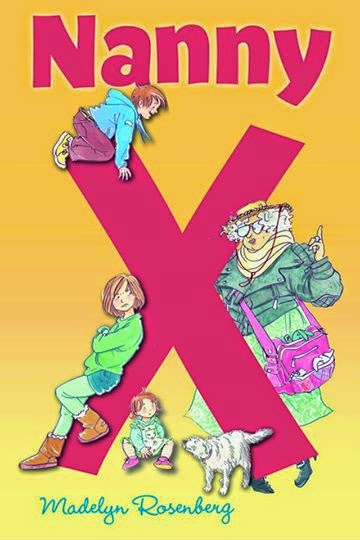
This month, I published two books that I refer to as “brother-sister” books, Nanny X and How To Behave at a Tea Party. In both of these books, siblings have different ideas of the way things should be. Knowing that many students have siblings with whom they might sometimes disagree, these books can provide the perfect time to talk about point of view. You don’t always need a disagreement to show point of view, of course, but it’s an easy way to show characters with different views of the world.

Writing prompt:

This is a relatively simple point-of-view exercise that will get kids thinking about how different people might tell a story. 

First, pair up students and pair up characters. You can give your students free rein or provide the characters for them. 

Some examples might be:
A brother and a sister (humans, monsters, bears…)
A child and a parent (humans, monsters, bears…)
A student and a teacher (humans, monsters, bears…)
A super hero and a super villain
A human and a dog
A human and an alien

Next, have your students choose a situation where your characters would be in the same place, but might have a different view of their situation. You can give them free rein or provide some examples, where they can mix and match:

It’s time for dinner and one of your characters is serving a mysterious stew to the other.
Your characters are at the ballet and one wants to dance
Your characters are climbing a mountain but one is afraid of heights
One character is taking another character for a walk
A spaceship lands in the middle of the city/woods/playground.
One of your characters wants to take over the world.

Now have each of your students write a paragraph describing the situation as their character would see it. Have your students use persuasive, descriptive language and tell them to tap into their acting skills, too.

When I write different points of view, I try to always ask myself: what does this character want in the moment? What does this character want, ultimately? Tell your students to tap into their character’s feelings, to make things up, and above all, to have fun.


BIO: Madelyn Rosenberg is a journalist and the author of six books for children, including the recent Nanny X and How to Behave at a Tea Party. She writes everything from picture books to young adult. Visit her at www.madelynrosenberg.com

Monday, November 11, 2013

FUN WITH WORDS

Guest Post by Madelyn Rosenberg


My recent middle-grade novel, Canary in the Coal Mine, is about a small bird who busts out of the mines in West Virginia and tries to make things better for those he leaves behind. It’s set in 1931. When I was researching the novel, I spent a lot of time figuring out what people ate back then, what music they listened to, and how much things cost (thank you old Sunday newspapers). And then, after the copyeditor flagged a few of them, I learned to research something else: words.

I’d tried to take care, as I always do, in choosing just the right words for my story. I’d even consulted a linguistics magazine that listed common West Virginia expressions of the 1920s. But the copyeditor still highlighted a few words that wouldn’t have come into common usage until after my time period. “Gobbledygook,” for example, didn’t reach the dictionary until the early 1940s. “Motion sickness” had a similar date of origin. I’ve had motion sickness my entire life, and it never occurred to me that before 1940, people just felt dizzy and sick to their stomachs.

It usually takes a few years for a word to make it from common usage into the dictionary. The Oxford English Dictionary just recently added the term “bucket list,” but I’ll bet you’ve heard that term before.

The origin of a word is known as its etymology (a word that dates back to the 1300s).

For today’s Pencil Tips activities:

*Think of a word that makes you curious. Then go look it up in the dictionary. Far beneath the definition, or whether it’s a noun or a verb, you will see “origin” and a date. How far does your word go back? Does the dictionary tell you anything else about your word’s origin?

*Invent a word of your own, like Nick Allen did in Andrew Clements’ Frindle.  http://andrewclements.com/books-frindle.html  Maybe you’ll invent a word that describes the way you feel when you slam your funny bone against the kitchen table, or a word for a mosquito bite that keeps itching even after you put on Calamine lotion. Share your words in class.

*Play a game of Fictionary. This is a favorite in my family because everyone ends up laughing. I’ve found it works best in groups of five or six.

Rules:
Grab a dictionary. Call out words until you find one where no one knows the definition. Have each player make up a definition that sounds like a dictionary definition, while you write the real definition on a piece of paper.

Read the definitions one at a time. Have the other players guess which one they think is real.

If the correct definition is guessed, the player guessing gets a point.
If a made-up definition is guessed, the player who wrote the definition scores a point.
If no one gets the correct definition, the player who chose the word gets three points. You can restructure the scoring however you’d like; we often play with no scoring at all, but for bragging rights, as in: “Daddy really believed ‘hurkle’ was a species of fish.”

Pass the dictionary to the left for another round.

If you’re interested in more information about how a word makes its way into the dictionary, check out this link to the Oxford English Dictionary http://public.oed.com/
and this handy FAQ from Merriam-Webster: http://www.merriam-webster.com/help/faq/words_in.htm

BIO: Madelyn Rosenberg is the author of two picture books, Happy Birthday, Tree which was on the Bank Street best-of list and The Schmutzy Family, a Sydney Taylor Notable Book and a finalist for the National Jewish Book Award. Her first middle-grade novel, Canary in the Coal Mine, was chosen to represent West Virginia in the States Pavilion at the 2013 National Book Festival. Madelyn is also the author of two forthcoming books: Dream Boy, a YA novel co-written with Mary Crockett, due out in July 2014 and How to Behave at a Tea Party, a picture book due out in fall 2014. To learn more about Madelyn and her books, please visit http://www.madelynrosenberg.com/.