Showing posts with label Point of View. Show all posts

Monday, December 10, 2018

Look at Things from a Different Angle


Guest Post by Sue Fliess

We all know the story of Santa Claus, who has his long list of gift requests for all the girls and boys around the world. We know he has a sleigh and his 8 (plus Rudolph) reindeer who guide that sleigh. And we know he uses his magic to deliver all those gifts in one magical night, letting children wake up to delight in them Christmas morning.


But we really don’t know much about Mrs. Claus. What is she like? Is she meek? Headstrong? Fun? With my new book, Mrs. Claus Takes the Reins, I decided to explore the personality of Mrs. Claus, the woman behind the scenes who always makes sure Santa is ready for his long journey. When Santa gets sick and decides Christmas must be cancelled, I thought Mrs. Claus might be just the kind of woman who could take over in a pinch, and get the job done—with the help of the elves, but really with no magic at all. And does she ever! She uses her smarts and skill and overcomes every obstacle…and even returns to the North Pole ten minutes early.

Rewrite a story from a new point of view!
Ask your students to choose a favorite book, then rewrite a scene from that book (or a new story altogether, if it’s a picture book), from a different character’s point of view. What if we heard the trickster magician’s side of the story in Frosty the Snowman? Or in Kate DiCamillo’s Because of Winn Dixie, wouldn’t it be fun to know what the dog is thinking? Maybe we hear Peeta’s story from the Hunger Games, or how Hagrid is feeling in a scene from Harry Potter.

Encourage students to do this while they are writing original stories as well, to help develop the secondary characters in their stories. The discoveries may surprise them!


Monday, January 15, 2018

Earth's Point of View


Get your class thinking about writing fun, humorous nonfiction with Stacy McAnulty’s Earth: My First 4.54 Billion Years (illustrated by David Litchfield).


After you read Earth out loud, here are some ideas for getting your students writing:


1)    Earth is written in first person, from Earth’s point of view. Think of an object in your classroom. Write about the school day from the point of view of that object. Make sure to show your object’s personality in your writing…is the object shy? A know-it-all? Silly? Vain?

2)    Earth tells the life story of our planet. Whose life story would you like to tell? Pick a person, object, or animal in your life, and write a short autobiography. (Hint: before you start writing, you will need to decide what are the most important events and details to share…you can’t include everything, or your story will be too long and boring!)

3)    At the end of the book Earth, author Stacy McAnulty has a funny note addressed to an “alien visitor.” What if an alien visited Earth and it was YOUR job to teach that alien everything important about our planet? Write a speech, make a pamphlet or poster, draw a cartoon…use your creativity to show what facts you would tell the alien visitor about Earth, and how you would make those facts seem interesting to your audience!


Monday, July 24, 2017

In Pursuit of Civil Conversation

Guest Post by Mary Knight
author of Saving Wonder, winner of the 2017 Green Earth Book Award

As I’ve traveled to schools for author visits since the publication of my debut novel, Saving Wonder, teachers have been telling me how concerned they are about the divisive rhetoric their students are witnessing from our country’s leaders. 


In the spirit of encouraging the practice of civil conversation, I’ve created the following lesson, which invites students to activate their empathy as they see an issue from the “other’s” point of view. It also offers practice in close reading, as well as writing dialogue within a scene. I use Saving Wonder as a model text in this lesson, although I’m sure examples of civil dialogue exist in other novels as well.

In Saving Wonder, my protagonist Curley Hines has a conversation with the new coal boss (Mr. Tiverton) who is threatening to blow the top off his mountain through a devastating mining process called mountaintop removal. A lot is at stake for both characters, but they nevertheless have a civil (albeit passionate) conversation that allows each to express his point of view.

The following is an abbreviated lesson with a corresponding writing prompt. It assumes that students have at least read up to Chapter “P.” If you’d like an extended version with a fun, optional activity, please contact me through my message page at my website: www.maryknightbooks.com. I’d love to hear what you think and if you use the lesson, your results!

A Lesson on Civil Dialogue

Before engaging the lesson, explore the concept of “empathy” with your students. Say: One of the ways authors inspire readers to care is by writing with empathy. Does anyone know what empathy is? Empathy is the ability to walk in another person’s shoes, to see the world through another person’s eyes or point of view, or to imagine what another is feeling. You can empathize with someone who is feeling happy or sad or any other emotion. Invite students to think of examples from their own lives where they’ve empathized with another person or animal (pet).

Before reading and/or rereading Chapter “P,” pgs. 154-163, ask: Do you think Mr. Tiverton is a “bad guy” in this novel? Ask for a show of hands, yes and no. Then ask: Why do you think that? Be sure to remain neutral. After opinions have been expressed, invite your class to reread the following, saying: Let’s (re)read the following chapter and see what our thinking is then.

Read and/or reread the scene.
After reading: On a T-chart, title the page: “Red Hawk Mountain.” Under that, make two columns: one titled “Curley’s Viewpoint” and one titled “Mr. Tiverton’s Viewpoint.” Use a different color for each point of view. Ask students to first list what Curley thinks and feels about mining Red Hawk Mountain and the mountain itself, referring to the text as often as they like. Invite them to do this by “empathizing” with Curley, by putting themselves in his shoes.

After this feels complete, facilitate the same process with Mr. Tiverton. Be sure to invite students to step into the shoes of Mr. Tiverton. How does he see Red Hawk Mountain? What does he think and feel about the mining process? Again, invite students to refer to the text as often as they like.

After you’ve completed this exercise, ask again: So, who thinks Mr. Tiverton is a bad guy? Why or why not? It’s okay for students to still hold the opinion that he’s a bad guy. That’s not a wrong answer; it’s an opinion. Ask: Regardless of what we think of Mr. Tiverton, do you understand his viewpoint a little bit better after stepping into his shoes? When we empathize with someone, it doesn’t necessarily mean that we agree with them, right? Still, empathy can help us understand someone else’s viewpoint, an important skill in a world with lots of different perspectives.

Reader’s theater: If there’s time, “play out” this dialogue (pgs. 158-163) between the two perspectives through a Reader’s Theater activity, encouraging each actor to look at the chart and “step into the shoes” of his or her character, “seeing what he sees” and “feeling what he feels.” Encourage them to: “Read from the heart of your character—like you are passionate about everything you are saying!” Reading with empathy encourages fluency!

After Reader’s Theater, ask the actors: How did it feel to play your part? Is there anything more you understand about your character after speaking his words?

Ask the rest of your class: After watching and listening, do you feel any different about Mr. Tiverton now? In what ways does the author help us empathize with each of her characters?

Writing with empathy: Using the above dialogue scene as a model text, ask students to: Write a scene like the one we’ve just acted out, where you and a parent, a sibling, a teacher or a friend are having a conversation about something that means a lot to you . . . and the other person holds a different perspective or opinion than yours. Offer examples of family or school issues students might want to explore in their writing.   

Once students have decided on their “issue,” ask them to create a T-chart—two columns on a sheet of paper, one representing the writer / narrator’s viewpoint and the other column representing the viewpoint of the other character in their story. Encourage them to “step into the shoes” of each character and write down each character’s feelings as well as ideas and thoughts about this issue. 

Ask students to write at the bottom of this brainstorming page, where the conversation is taking place and whenAfter they’ve done this pre-writing activity, invite them to write a scene between themselves and another person using dialogue that explores two different points of view.


Bio: Saving Wonder is Mary’s debut novel, published in 2016 by Scholastic Press, and selected for numerous honors, including the Green Earth Book Award for Children’s Fiction, a Parents’ Choice award, and a Children’s Book Council Notable Book for Social Studies. Mary is also working on a professional development book called, CoreEmpathy: Transforming the Literacy Classroom, with her writing partner and literacy specialist, Christie McLean Kesler. www.CoreEmpathy.com  

Monday, June 13, 2016

Writing Instructions with A Fairy Friend


Guest post by Sue Fliess

To believe in magic fills the heart and mind with wonder. As a child, I always imagined I wasn’t alone and believed that some kind of magical creatures must exist. Were there aliens? Beings that we couldn’t see, but lived among us? So tiny we didn’t know they were there, or so big that our Earth could fit on their fingernail? I thought anything was possible.


In my newest book, A Fairy Friend, illustrated by Claire Keane and published by Macmillan, I write about magical, mystical fairies; how they live among us, and how one only needs to know where to look and what to do to attract one.

The story invites the reader to join that miniature dream world by giving detailed instructions on how to do so. 

Want to have one come to you?
Here is what you need to do…
Build a house of twigs and blooms,
Decorate her fairy rooms—
Walls of blossoms, cotton floor,
Sparrow feather for her door.  

This is a great opportunity for you to have your class write their own set of instructions (explaining to them that they are writing from a second person point of view), talking directly to their reader. 

Have students choose something they are passionate about—sports, dancing, dogs, playing an instrument, building, cooking, etc. The first few sentences can be description about that topic or thing.

Friendly fairies soar the skies,
Ride the backs of dragonflies.
Wings of fairies shimmer, spark,
Twinkle, glimmer in the dark.

The next part can be where they write out instructions on, for example, how to score a goal in soccer, how to teach a dog to sit, how to pirouette, construct a fort, or even how to make a peanut butter sandwich.

Encourage them to be as detailed as possible, and to assume that the reader has never tried this particular thing before. If possible, as with the dance move, have the other students follow the instructions of their peers.

They can wrap it up by writing about the results of following the actions – how it feels to score a goal, what it’s like to perform a ballet recital, how yummy a peanut butter sandwich is, and so on.

Many reluctant writers find writing instructions lots of fun. And it is a welcome change for  students to be able to instruct someone else on what do to, instead of always being told what do to. 


BIO: Sue Fliess ("fleece") is the author of numerous children's books including A Fairy Friend, Calling All Cars, Robots, Robots Everywhere!, The Hug Book, Tons of Trucks and Shoes for Me! Her background is in copywriting, PR, and marketing, and her articles have appeared in O the Oprah Magazine, Huffington Post, Writer's Digest, Education.com, and more. Her Oprah article was included in the anthology, O's Little Book of Happiness. Fliess has also written stories for The Walt Disney Company. Her picture books have received honors from the Society of Children's Books Writers and Illustrators, have been used in school curriculums, museum educational programs, and have even been translated into French. She's a member of SCBWI and The Children's Book Guild of DC. Sue lives with her family and a Labrador named Charlie in Northern Virginia. Visit her at www.suefliess.com.

Monday, September 7, 2015

Back to School with BALLOONS Lit. Journal


In August, I was very pleased to see my poems, “The Math Beast” and “Thunder” featured in Issue 2 of a new online publication called BALLOONS Lit. Journal.


After reading the journal in its entirety, I would like to recommend this rich resource to teachers and young readers everywhere. BALLOONS Lit. Journal features work from both established and young writers from all around the world. It also includes work appropriate for a wide age range of students.

The inclusion of work by young people makes this a wonderful model for young writers. Share the poem, “Rain,”by ten-year-old Sage as an excellent example of using descriptive details and then ask students to write their own weather poems.


Two fiction stories in this issue are told from the viewpoint of inanimate objects. “Knight Errant” is a clever chess story set in medieval times with a twist ending.

“Carnival Balloons” follows the worried thoughts of a balloon watching over a lost child.

Both of these stories could be used as models for writing from an object’s viewpoint, particularly a toy or game.

The art in Balloons Lit. Journal is utterly delightful. “The Earth—A Miracle” by Hyonju (Karen) Ahn could inspire writing about the earth, the solar system, and/or ecology.


Ahn’s “City Lights” could make a terrific writing prompt and discussion for sensory details. Project the art on a smart board screen and brainstorm descriptive words for the busy sights and sounds depicted. Ask your students to describe a visit to the city or write a story about someone who is experiencing New York City for the first time.  


Attractively designed and available for free to educators, BALLOONS Lit. Journal, should be on your back-to-school list for writing workshop ideas. Check it out at 


Monday, September 29, 2014

Brothers and Sisters With a Point of View


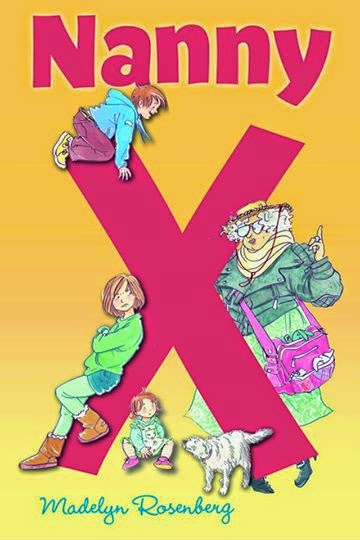
This month, I published two books that I refer to as “brother-sister” books, Nanny X and How To Behave at a Tea Party. In both of these books, siblings have different ideas of the way things should be. Knowing that many students have siblings with whom they might sometimes disagree, these books can provide the perfect time to talk about point of view. You don’t always need a disagreement to show point of view, of course, but it’s an easy way to show characters with different views of the world.

Writing prompt:

This is a relatively simple point-of-view exercise that will get kids thinking about how different people might tell a story. 

First, pair up students and pair up characters. You can give your students free rein or provide the characters for them. 

Some examples might be:
A brother and a sister (humans, monsters, bears…)
A child and a parent (humans, monsters, bears…)
A student and a teacher (humans, monsters, bears…)
A super hero and a super villain
A human and a dog
A human and an alien

Next, have your students choose a situation where your characters would be in the same place, but might have a different view of their situation. You can give them free rein or provide some examples, where they can mix and match:

It’s time for dinner and one of your characters is serving a mysterious stew to the other.
Your characters are at the ballet and one wants to dance
Your characters are climbing a mountain but one is afraid of heights
One character is taking another character for a walk
A spaceship lands in the middle of the city/woods/playground.
One of your characters wants to take over the world.

Now have each of your students write a paragraph describing the situation as their character would see it. Have your students use persuasive, descriptive language and tell them to tap into their acting skills, too.

When I write different points of view, I try to always ask myself: what does this character want in the moment? What does this character want, ultimately? Tell your students to tap into their character’s feelings, to make things up, and above all, to have fun.


BIO: Madelyn Rosenberg is a journalist and the author of six books for children, including the recent Nanny X and How to Behave at a Tea Party. She writes everything from picture books to young adult. Visit her at www.madelynrosenberg.com

Monday, July 7, 2014

VARIATIONS ON A VACATION


It’s summer and many of us are going on vacation or taking time to visit friends or relatives. You may be traveling by train, plane, boat, car, motorcycle, skateboard, or perhaps by foot. You might explore wonders of nature, ride wild roller coasters, or visit your favorite cousins. Vacation experiences vary for each of us depending on how you travel, where you go, what you do, and, of course, who you see or meet on your trip.

Variations on a Vacation

List four basic facts about your vacation:
1.     How you traveled
2.     Where you visited
3.     Where you stayed
4.     What you did (Name at least one activity or vacation experience.)

Example:
1.     Pittsburgh to see relatives
2.     In a plane and a car
3.     Visited grandparents
4.     Saw a wild bird habitat

Condense your vacation facts into a short travel poem:

A plane,
car ride, too.
Curvy roads to
Pittsburgh. 
Grand
Parents
hug so sweet.
Tweet! Tweet!
Look! An aviary
full of beautiful,         
singing birds.
Feathers fluttering…
Family fun.

Write a paragraph in first person with more personal details:
           
I traveled on a plane to Pittsburgh. At the airport, my family rented a car to visit my grandparents. Grandma is sweet and she made sweet donuts for us, too. Yum! We went to a bird habitat called an aviary to see cool birds. I saw a penguin and even an eagle. It was awesome! We took lots of bird pictures and then our family got dressed up and went out for fancy dinner for my grandparent’s anniversary. I ate chocolate cake. Yum! It’s my favorite!

Write another variation in third person to add in more narrative details:
           
One summer evening, a young girl and her family flew far from her home on a jet plane to Pittsburgh, a large city in western Pennsylvania. After gathering their luggage, they rented a minivan and drove along a highway and many hills and curving streets to a lovely red brick house with a big tree in the front yard. The girl’s grandparents welcomed them with hugs. They had homemade donuts and milk for a good night snack. Early the next morning they went to visit an amazing aviary, where the girl saw birds from all over the world including a bald eagle. “It’s beautiful!” she exclaimed. The family took photos of many birds they saw that day, including penguins, pelicans, and even an ostrich. They went to a special dinner at an elegant restaurant, to celebrate their grandparent’s 35th anniversary, where the girl ate chocolate cake for dessert.
           
Try using dialogue only to share your vacation memory or imagine your vacation in the style of a comic book and add drawings with the words. What other fun variations can you write to describe your vacation?

Have a wonderful summer vacation!


Monday, October 7, 2013

POINT OF VIEW: WHOSE STORY IS IT, ANYWAY?

Guest Post by Natalie Dias Lorenzi

When I wrote the first draft of my middle grade novel, Flying the Dragon, the story had only one main character—eleven-year-old Hiroshi who leaves his home in Japan and moves to the US. I needed some conflict in the story, so I added Skye, a mean girl in Hiroshi’s 5th grade class. Skye’s dad is Japanese, so although she can understand Japanese, she doesn’t speak it very often. Hiroshi speaks no English, so he needs Skye’s help. But she feels uncomfortable speaking Japanese in front of her classmates, so she leaves Hiroshi to fend for himself.

Each time I revised the story, I started to wonder if Skye really wasn’t as mean as I’d made her out to be. The only way to find out for sure was to rewrite the story from Skye’s point of view. But I still wanted Hiroshi as a main character, so I decided to give them equal time on the page; the final version of Flying the Dragon is told in alternating chapters from Hiroshi’s and Skye’s points of view.

When you’re drafting and revising your stories, take some time to experiment with point of view:

1. Create a problem for your character—something that makes him or her extremely uncomfortable (sad, angry, nervous, etc.). Using the third person point of view, write a scene that shows your character struggling with this problem.

2. Rewrite the scene using the first person point of view. Which version do you like best? Why? What are the pros and cons of each?

3. Who is the one person that your character does NOT want to be around? (For Hiroshi, this person was definitely Skye!) Rewrite the scene from that person’s point of view—either in third or first person.  What did you learn about your character that you didn’t know before?

You may have to try out different points of view before settling on one that rings true for your story. Even if you wind up using your original point-of-view pick, you’ll come away knowing your characters better than ever.

Happy Writing!

Natalie Dias Lorenzi is a school librarian and author of Flying the Dragon, an award winning middle grade novel described by Kirkus in a starred review as  “A quiet, beautifully moving portrayal of a multicultural family.” Visit her online at http://natalielorenzi.com/

Monday, February 18, 2013

HISTORY WITH A HISS (AND A BARK AND A SQUEAK)


Playful prompts can help students to explore history and writing in ways that reinforce lessons in both.  Applicable at any time during the year, this exercise can be especially appropriate for Presidents’ Day.

1.  Tell kids about the pets owned by U.S. Presidents.  George Washington had a favorite horse, Nelson, whom he rode when the British surrendered to the Americans at Yorktown in 1781, which ended the Revolutionary War.  Abraham Lincoln’s sons kept rabbits, goats, and a turkey named Jack at the White House.  Calvin Coolidge had a pet raccoon, and Theodore Roosevelt’s six kids happily tended dogs, cats, guinea pigs, birds, snakes, a badger, and a bear during their father’s administration.

2.  Read and talk about First Dog Fala by Elizabeth Van Steenwyk, illustrated by Michael Montgomery (Peachtree 2008).  Fala was Franklin Delano Roosevelt’s beloved Scottish terrier.  She lived with him during his presidency from 1940 to his death in 1945; and her bronze sculpture sits beside that of her master in the Roosevelt Memorial in Washington, DC.  Ask the class what a presidential pet like Fala might notice.  How might he describe the president and an important historical event? Would a pet’s perception be different from what people might notice?  Why or why not?

3.  History/Writing Prompt #1:  Choose a President or ask students to choose a favorite to research.  Have children research the particular President’s important accomplishments as well as worries, mistakes, or low points of his term(s).  Ask students to take the point of view of the President’s pet and, as that pet, to write about what they notice/feel about the President and about that historical event.  Or they might write from the perspective of a “hidden” animal (spider, mouse).

4.  History/Writing Prompt #2:  Choose a historical event and discuss its importance with the class.  Talk about what happened.  Then ask students to become an animal witnessing that historical event or living during a certain point in time (an ox pulling a wagon West, the horse of a Pony Express rider, a dog welcoming his soldier master home from a specific war).  Have students write from the point of view of that animal and describe what the animal saw, heard, smelled, and felt. 


Monday, March 5, 2012

THE KEY TO GOOD WRITING


Inspired by Mary Amato’s post on Sharing Mistakes, http://penciltipswritingworkshop.blogspot.com/2012/02/sharing-mistakes.html, I told students the story of a recent poem acceptance. In addition to a few stylistic changes, the editor asked if I would consider chopping off the last two lines. I was hesitant. The poem felt unfinished without the ending. Then, as I usually do, when an editor makes a suggestion, I examined those lines again. Did I really need them? Were they redundant? Could I rework the beginning so the new ending felt more resonant? I gave it a whirl and revised the poem, creating a version I liked better. In the end, I was grateful to the editor for pushing me to write a stronger poem. 


Art by Maggie D.
This is not the first time an editor has asked me to remove an ending, change a title, or even switch the point of view. Revisions at the request of an editor are part of any published author’s life.  Books rarely spring perfectly formed from the writer’s brain. They benefit from the suggestions of others. When someone gives me a good idea for fixing one of my stories or poems, they give me a present—an opportunity to write something better. In the long run, I am happier.  Of course, it can be hard to hear that writing you think is finished needs further work, but good writing requires hard work. At author visits, I often tell students how I expanded my original idea for Zapato Power from a 1,0000 word easy reader to a 5,000 word chapter book. Likewise, my Constitution book, Unite or Die: How Thirteen States Became a Nation began as a four page skit of 800 some words that I expanded to over 3000 words. Students are accustomed to hearing their teachers tell them they should add details or change things in their writing. It can be comforting (and empowering) for students to hear that all writers are asked to expand their stories. A frequent question at author visits is: “How many times do you revise?” The truth is I revise so many times, I lose track. Thirty times may be an average number but I sold a book last year that I’ve been re-writing in different formats for over twenty years. That book must have gone through at least one hundred revisions.

Teachers are often frustrated by a student’s unwillingness to go back and revise. Kids often feel they are finished the second they put the period on the last sentence. So it bears repeating as often as possible that revision is the key to good writing.  While not all students will be motivated to rework their pieces, some will be inspired with amazing results. A student recently came to me with a brief third person story about a father/son ski trip that ended in the boy’s death. I suggested that she fill out the story to make the reader feel more connected to the characters. I also commented on how the death of a child is very sad. The student said she wanted to write a sad story. I said, “That’s fine. Just make the reader feel the experience.” To be honest, I didn’t expect the student to pursue the project. About a week later, the student came back to me with a story written from the viewpoint of a daughter who lost her father during a skiing accident. I was blown away by the immediacy of the voice. A couple of ho-hum paragraphs about a nameless boy who died in a hole had been transformed into a riveting first person story. I felt the panic and pain of this new character as she realized her father was fatally injured. The young writer had added strong dialogue and vivid details one would never have imagined from her first draft. She proved to herself and her readers how much a new approach can enhance a story.  

Another example comes from a student who wanted to write a story about the day she overcame her fear of riding roller coasters. However, she got bogged down in the beginning and somehow ended up spending more time describing the breakfast she ate and the drive to the amusement park than the roller coaster ride. I suggested that she trim the beginning and add more details about her fear of riding coasters and how she overcame it. At first, she balked (as I did when the editor asked me to rewrite my poem). Then, she sat down to try again. The end result was a piece so focused the reader felt the queasiness in the girl’s stomach as she considered overcoming her fears.

As teachers, sometimes we are afraid to push our students to do better work. We don’t want to discourage them. But the delighted face of a student who realizes he/she has transformed a weak work into a strong one is an empowering gift for all involved.

www.jacquelinejules.com

Monday, February 27, 2012

TELLING WHO'S TELLING: POINT OF VIEW


By the time we reach adulthood, most of us know (although it’s not always easy to keep it in mind) that the way in which one interprets the world depends on one’s point of view.  In teaching young students about point of view as a literary device, the goal is to help them understand the various perspectives from which a story can be conveyed by the author to the reader.  

There are three main categories of point of view:

The objective point of view presents the action and the characters' speech without comment or emotion.  Fairy tales and most picture books for young children are told in this straightforward manner, as if reporting a news story. As Sgt. Joe Friday used to say, for those of us old enough to remember, “Just the facts, Ma’am.”

First person narration tells the story from a character’s own vantage point including his or her thoughts and emotions.  This point of view appeals to children once they have reached the age of introspection, so we find it quite often in middle grade fiction.  A few examples are Island of the Blue Dolphins, Jacob Have I Loved, So B. It, and When You Reach Me. 

The omniscient narrator knows about and shares with us the thoughts, motivations, and feelings of all the characters.  It’s not used very often in middle grade fiction, but is employed skillfully by Jean Birdsall in The Penderwicks series, in which the story is told variously from the points of view of each of the four sisters, though in the third person. 

For teaching first person point of view, see Mary Quattlebaum’s recent Pencil Tips post on writing a two-person poem.  Use her suggestions for crafting a lesson based on her own beautiful poem told from the perspective of both a child and a firefly. Or, following the format of The Popularity Papers series for middle graders, ask the children to keep an illustrated journal of happenings in the classroom for one week, then compare the journals to get their different points of view.

A lesson on the omniscient narrator could begin with giving students a passage from a well-known folk or fairy tale.  Have them read it, and then ask them to pretend to be mind readers, rewriting the passage to let the reader in on the thoughts and feelings of the various characters in the passage.

I’ve used a scene from “The Gingerbread Man” as an example.  Here is the traditional telling, done from an objective point of view:

An old woman was baking one day, and she made some gingerbread. She had some dough left over and so she made the shape of a little man. She made eyes for him, a nose and a smiling mouth all of currants, and placed more currants down his front to look like buttons. Then she laid him on a baking tray and put him into the oven to bake.

After a little while, she heard something rattling at the oven door. She opened it and to her surprise out jumped the little gingerbread man she had made. She tried to catch him as he ran across the kitchen, but he slipped past her, calling as he ran:

"Run, run, as fast as you can, you can't catch me, I'm the gingerbread man!"

And my retelling with an omniscient narrator:

An old woman was baking gingerbread one day and had some dough left over.  My husband is working hard in the garden, she thought.  I will make him his favorite special treat, a gingerbread man.  She made the shape of a little man.  She made eyes for him, a nose and a smiling mouth of currants.  Deciding to dress him as her husband was dressed, she made a row of currant buttons down the the gingerbread man’s chest.

After a while she heard something rattling the oven door, and a little concerned, opened it up, then jumped back, startled, as out leaped the gingerbread man.  He immediately took off across the kitchen floor.  Resolving not to let her husband’s treat get away, the woman trotted after it in hot pursuit.  But the gingerbread man, bent on freedom, felt sure he could easily give the old woman the slip: 

“Run, run as fast as you can, you can’t catch me, I’m the gingerbread man!” he sang out over his shoulder, his currant mouth wearing a confident smirk.

To continue the story, the narrator could give us the thoughts of the various animals that take up the chase.  And though we all know what befell the gingerbread man, here is a chance to describe his final thoughts, as well as those of the wily fox happily licking his chops after swallowing that tasty morsel.